





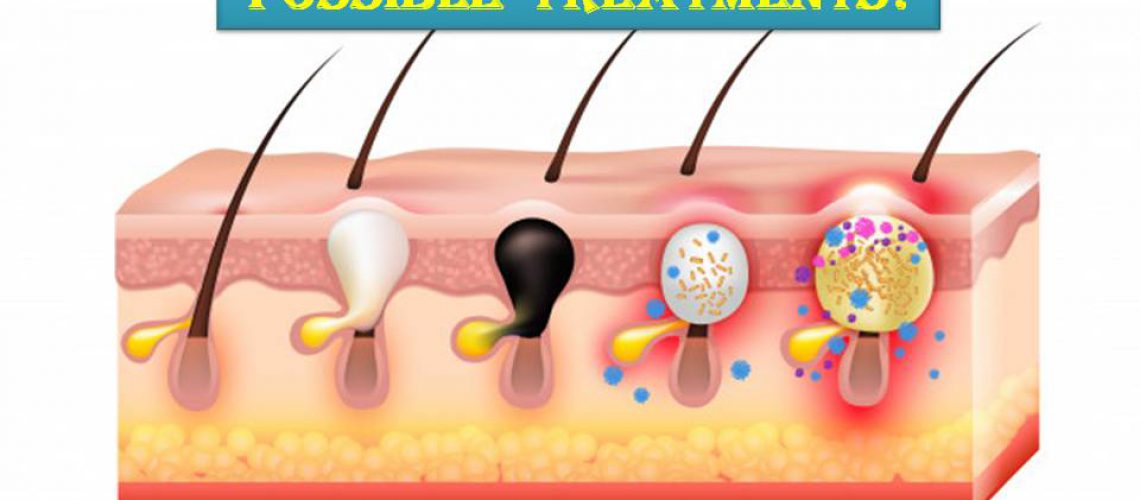

You may hear the word “breakout” to describe all kinds of acne, but this is not always an accurate description. Not all kinds of acne can spread across the skin.
Closed pores can cause acne. These can be attributed to:
- Excess oil production (sebum)
- Bacteria
- Hormones
- Dead skin cells
- Ingrown Hair
Acne is usually associated with hormonal fluctuations experienced during your teenage years, but adults may also experience acne. About 17 million Americans have acne, which is one of the skin conditions in children and adults.
It is important to determine what type of acne you are experiencing for successful treatment. Acne can be noninflammatory or inflammatory. The sub types of acne in both groups are:
- Blackheads
- Whiteheads
- Papules
- Pustules
- Nodules
- Cysts
It is possible to have many different types of acne at once – in some cases, even meeting a dermatologist can be very serious.
Read on to learn more about the sub types of acne and how you can treat them.
1). Non-inflammatory acne:

Noninflammatory acne include blackheads and whiteheads. They usually do not cause inflammation. They respond well to over-the-counter (OTC) treatments.
Salicylic acid is often marketed for acne, but it usually works best on noninflammatory warts.
It naturally exfoliates the skin, removes dead skin cells, leading to blackheads and whiteheads. Check it out on cleanser, toner and moisturizer.
Blackheads (open comedones)
Blackheads occur when a pore is clogged by a combination of sebum and dead skin cells. The top of the pore stays open, despite the rest of it being clogged. This results in the characteristic black color seen on the surface.
Whiteheads (closed comedones)
Whiteheads also form when the hole is filled with sebum and dead skin cells. But unlike the blackheads, the top of the hive is closed. It resembles a small lump that emanates from the skin.
Whiteheads are difficult to treat because the holes are already closed. Products containing salicylic acid can help. Topical retinoids give the best results for comedonal warts. Currently, adipine (deferin) is available as a retinoid over the counter. If this does not work for you, get a strong topical retinoids through your dermatologist’s prescription.
2). Inflammatory acne:

Red and swollen pimples are called inflammatory pimples.
Although sebum and dead skin cells contribute to inflammatory acne, bacteria also play a role in closing pores. Bacteria cause infection below the surface of the skin. This will remove painful acne scars.
Products containing benzoyl-peroxide help to reduce inflammation and eliminate bacteria in the skin. They can also remove excess sebum. Your doctor may prescribe oral or topical antibiotics with benzoyl-peroxide to treat your inflammatory acne. Topical retinoids are also an important part of combating inflammatory papules and inflammation.
Papules
Students will experience when the walls around your pores are broken with a severe burn. This leads to rough, clogged pores that are soft to the touch. The skin around these pores is usually pink.
Pustules
When walls around your pores are broken, explosions can also occur. Unlike the papules, the pus is filled with pus. These spots originate from the skin and are usually red. They often have yellow or white heads on top.
Nodules
Nodules occur when filled, causing swollen pores to further irritate and expand. Unlike pustules and papules, the nodules are deep under the skin.
Because the nodules are so deep inside the skin, you can’t usually treat them indoors. Prescription medications are needed to clarify these.
Your doctor or dermatologist may prescribe oral drug Sotret. It is made in the form of vitamin A and is taken every four to six months. It can treat and prevent nodules by reducing the size of the oil gland inside the pores.
Cysts
The cysts develop when the pores are closed by a combination of bacteria, sebum and dead skin cells. Conditions are deeper inside the skin and below the surface than the nodules.
These large red or white bulbs are often painful to the touch. Ulcer is a great form of acne, and they usually result in serious infection. These types of pimples are also prone to stains.
Prescribed isotretinoin (sotret) is commonly used to treat ulcers. In severe cases, your dermatologist may remove the cyst by surgery.


