Immunotherapy for kidney cancer—additionally called renal cell cancer—has immensely changed the treatment scene and by and large endurance of patients with metastatic kidney cancer.
The kidneys, situated on each side of the body toward the rear of the stomach hole, channel blood, clear waste, and make pee. An individual can live with just one working kidney.
Around 9 out of each 10 kidney cancers are renal cell carcinomas—cancers that structure in the coating of the tubules inside the kidney. Around 7 out of 10 individuals with renal cell carcinoma have a subtype called clear cell carcinoma. Non-clear cell kidney cancers incorporate papillary, chromophobe, mucinous cylindrical and shaft cell (MTSC), Xp11.2 translocation, medullary, and unclassified.
In its beginning times, kidney cancer ordinarily has no side effects. As a tumor develops, indications may remember blood for the pee, torment or a bump in the lower back or midriff, weakness, weight reduction, and growing in the lower legs or legs. Frequently a tumor will be found when a patient has a CT sweep or ultrasound for another explanation.
Hazard factors for kidney cancer incorporate tobacco use, corpulence, hypertension, interminable renal disappointment, and presentation to certain modern synthetic substances, for example, trichloroethylene, or radiation.
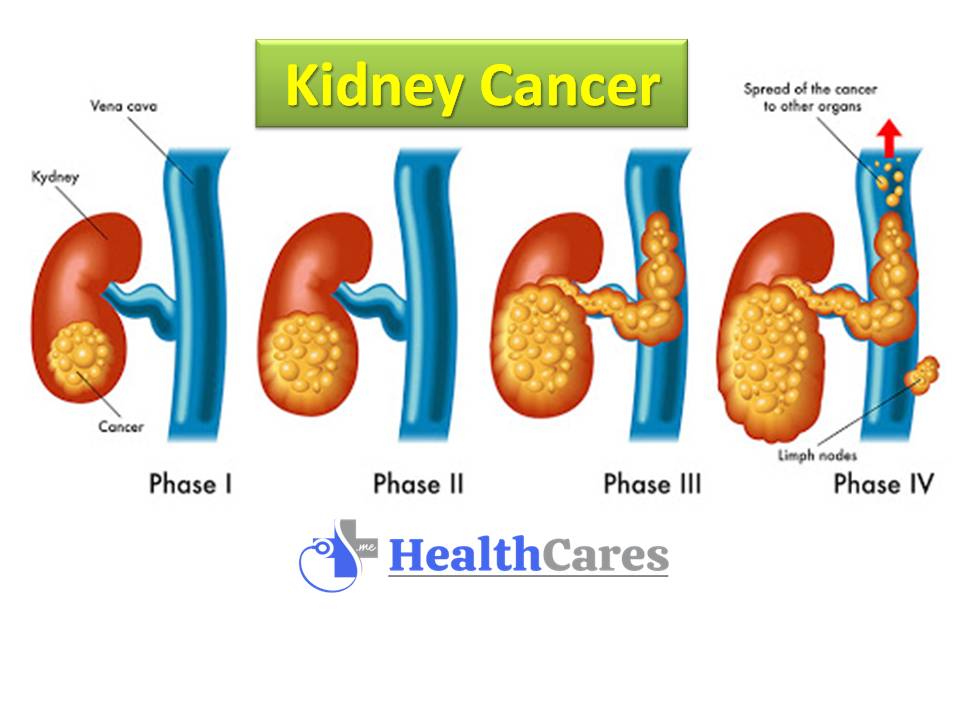
Internationally, there are an expected 400,000 instances of kidney cancancer,kidneycer analyzed every year, alongside 175,000 passing. Kidney cancer is the eighth most normal harm in the United States, with an expected 74,000 new cases and 15,000 passing in 2019. On the off chance that kidney cancer is analyzed while the cancer is as yet neighborhood (has not spread past the kidney), the five-year endurance rate is 93 percent. Like most cancers, kidney cancer is hard to treat once it has spread to different pieces of the body. Metastatic kidney cancer has a five-year-endurance pace of 12 percent.
Treatment for the Kidney cancer:
Treatment for kidney cancer relies upon singular variables, including the specific area of the tumor, phase of the tumor, and the individual’s general wellbeing.
Medicines for beginning periods (1-3) kidney cancer incorporate medical procedure, laproscopy, removal, and focused on treatment. Patients with cutting edge or metastatic kidney cancer are treated with foundational treatment that incorporates focused on treatment and immunotherapy.
Kidney cancer will in general be impervious to both chemotherapy and radiation treatment.
Immunotherapy is a sort of treatment that exploits an individual’s own invulnerable framework to help slaughter cancer cells.
The principal sign that kidney cancer may be a decent objective for immunotherapy originated from the perception that patients with metastatic kidney cancer every so often experienced unconstrained relapses after careful expulsion of the essential tumor. Previously, immunotherapies as insusceptible invigorating synthetic concoctions called cytokines were a typical first-line treatment for cutting edge kidney cancer, however today are utilized uniquely for cancers lethargic to focused treatments in light of the danger of genuine reactions.
(The cytokines interleukin-2 (IL-2) and interferon-alpha reason kidney cancers to contract in roughly 10-20 percent of patients and give solid abatements in a subset of these patients.) Several more up to date immunotherapies, specifically PD-1/PD-L1 and CTLA-4 checkpoint inhibitors, have become a necessary piece of the administration of cutting edge or metastatic kidney cancer.
There are at present six FDA-affirmed immunotherapy alternatives for kidney cancer either as a solitary operator or in blend with another immunotherapy or focused on treatment.
Targeted Antibodies:
Bevacizumab (Avastin®): a monoclonal antibody that targets the VEGF/VEGFR pathway and inhibits tumor blood vessel growth; approved for subsets of patients with advanced kidney cancer.
Immunomodulators:
Aldesleukin (Proleukin®): a cytokine that targets the IL-2/IL-2R pathway; approved for subsets of patients with advanced kidney cancer
Avelumab (Bavencio®): a checkpoint inhibitor that targets the PD-1/PD-L1 pathway; approved for subsets of patients with advanced kidney cancer, including as a first-lien therapy in combination with chemotherapy
Nivolumab (Opdivo®): a checkpoint inhibitor that targets the PD-1/PD-L1 pathway; approved for subsets of patients with advanced kidney cancer
Pembrolizumab (Keytruda®): a checkpoint inhibitor that targets the PD-1/PD-L1 pathway; approved for subsets of patients with advanced kidney cancer, including as a first-line therapy.
The combination of nivolumab and ipilimumab (Yervoy®), which target the PD-1/PD-L1 and the CTLA-4 pathways, respectively; approved for subsets of patients with advanced kidney cancer
Several ongoing trials are testing the feasibility of using immunotherapy in early-stage kidney cancer, alone and in combination with surgery.
CRI`s Impact in kidney:
The Cancer Research Institute has upheld the best researchers in the field moving in the direction of the improvement of kidney cancer treatment, remembering financing for inquire about for IL-2 and interferon and more up to date treatment approaches utilizing checkpoint barricades.
CRI likewise subsidized a clinical preliminary of interferon-alpha in human patients in 1978, work that exhibited kidney cancer’s affect ability to interferon—making ready for treatment’s endorsement by the FDA.
- In 1993, in light of promising research facility discoveries, CRI offered budgetary help for a stage 1 clinical preliminary for patients with metastatic renal cell carcinoma, prompting the making of GVAX, a remedial cancer antibody.
- In 1999, CRI-financed scientists utilized SEREX innovation in distinguishing tumor-related antigens in patients with renal cell carcinoma, giving a strong establishment to the hypothesis that renal cancer could be immunogenic—conspicuous by the human resistant framework.
- In 2010, a few CRI specialists effectively finished a stage 1 examination that indicated a monoclonal neutralizer (PD-1 barricade) could instigate visit tumor relapses in renal cancer, among other cancer types, with low poisonousness rates.
- In 2012, CRI CLIP Investigator Jeffrey Rathmell, Ph.D., of Vanderbilt University found that enemy of tumor T cells in kidney cancer were seen as subject to glucose and neglect to work without it.
- In 2015, the CRI Anna-Maria Kellen Clinical Accelerator propelled a clinical report that tries to decide the adequacy of consolidating the CTLA-4 inhibitor tremelimumab, with the PD-L1 inhibitor durvalumab, in patients diagnosed with different propelled strong tumors who have bombed standard treatment.
- Investigate CRI’s ebb and flow support for kidney cancer look into in our subsidizing index.
Targeted antibodies:
Directed antibodies are proteins delivered by the insusceptible framework that can be altered to target explicit markers on cancer cells so as to disturb cancerous movement, particularly unreasonable development. Counter acting agent tranquilize conjugates (ADCs) are outfitted with hostile to cancer medicates that they can convey to tumors. Bi-explicit T cell-connecting with antibodies (BiTEs) tie both cancer cells and T cells so as to enable the safe framework to react all the more rapidly and successfully. Counter acting agent focuses under assessment in kidney cancer clinical preliminaries include:
- Angiopoietin: this pathway can advance the development of veins in tumors
- CD52: a protein found on the outside of develop insusceptible cells just as other cell types
- CD56: a protein found on the both neurons and regular executioner safe cells
- cMET: a development related pathway that is regularly anomalous initiated in cancer
- EGFR: a pathway that controls cell development and is regularly transformed in cancer
- HER2: a pathway that controls cell development and is generally overexpressed in cancer and related with metastasis
- TROP2: a protein that is usually overexpressed in cancer and seems to help cancer cell self-reestablishment, multiplication, intrusion, and endurance
- VEGF/VEGF-R: a pathway that can advance vein arrangement in tumors.
Cancer Vaccines:
Cancer immunizations are intended to evoke an invulnerable reaction against tumor-explicit or tumor-related antigens, urging the safe framework to assault cancer cells bearing these antigens. Cancer immunizations can be produced using an assortment of parts, including cells, proteins, DNA, infections, microscopic organisms, and little particles. Cancer immunization focuses under assessment in kidney cancer clinical preliminaries include:
- P53: a tumor silencer protein that is regularly changed, nonfunctional, and over expressed in cancer
- Customized neoantigens: these anomalous proteins emerge from changes and are communicated solely by tumor cells
- Tumor-related antigens (TAAs): proteins regularly communicated at anomalous elevated levels on tumor cells that can be utilized to target them; likewise found on typical cells at lower levels
- WT1: a protein that is frequently transformed and anomalous communicated in patients with cancer, particularly Wilms’ tumor (WT).